They Know Your Name — and That Changes Everything
There's a ramen shop in Nerima where the owner, a soft-spoken man in his sixties named Fujita-san, doesn't hand you a menu on your second visit. He just nods, disappears behind the curtain, and comes back with exactly what you ordered last time — maybe adjusted slightly if the weather's cold and he thinks you could use something richer. He's never asked your name. He doesn't need to. He already knows you.
This is not a quirk. This is a practice. And it's more radical than it sounds.
The Invisible Architecture of Belonging
When people talk about community in Tokyo, they often reach for the big stuff — the matsuri, the neighborhood associations, the shared rituals of public life. But some of the most durable community bonds in this city are built on something much smaller: the daily, unremarkable moment when someone sees you and actually registers that you exist.
Think about what that means in a metropolis this size. You can ride the same train for a decade and never once make eye contact with another regular. You can live in an apartment building for years without knowing your neighbors' faces. The city is engineered for efficient coexistence, not necessarily for connection. Which is exactly why the people who choose to connect anyway stand out so sharply.
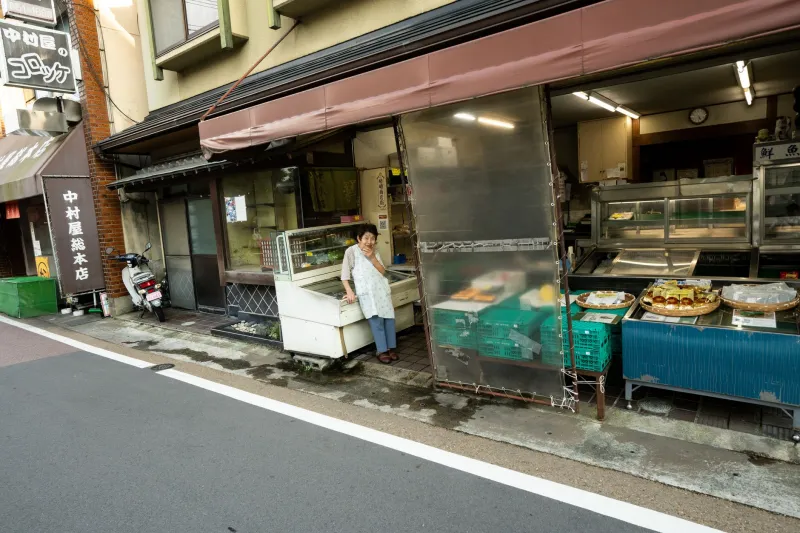
In Tokyo's residential neighborhoods — places like Nerima, Koenji, Togoshi, Yanaka — these figures show up in predictable roles but with unpredictable depth. The ramen shop owner who tracks your preferences. The elderly woman who runs the flower stand and greets every passerby like a returning traveler. The convenience store clerk who can tell, just by the way you're walking, whether you need a quick "お疲れ様" (good work today) or just want to pay and go.
Call them neighborhood anchors. They're not elected. Nobody gave them a title. They just decided, at some point, to pay attention — and kept doing it.
What Consistency Actually Costs
It's easy to romanticize this stuff from the outside, but let's be honest about what it takes. Fujita-san opens his shop six days a week. He's there before the lunch rush and stays until the last customer leaves, sometimes past 10 PM. He's been doing this for over twenty years. The flower shop keeper down the block, Yamamoto-san, has been at her corner since before the neighborhood's coffee shops were even a concept. She knows which salarymen are stressed by how they walk past her without looking up. She knows which kids from the nearby elementary school will stop to pet the small potted succulent she keeps on the edge of the display.
This kind of presence is a choice made every single day. It's not glamorous. It doesn't scale. You can't turn it into an app.
And yet what these people create — without any formal infrastructure, without funding or frameworks — is something urban planners spend millions trying to manufacture: a place where people feel known.
The Convenience Store Clerk Who Gets It
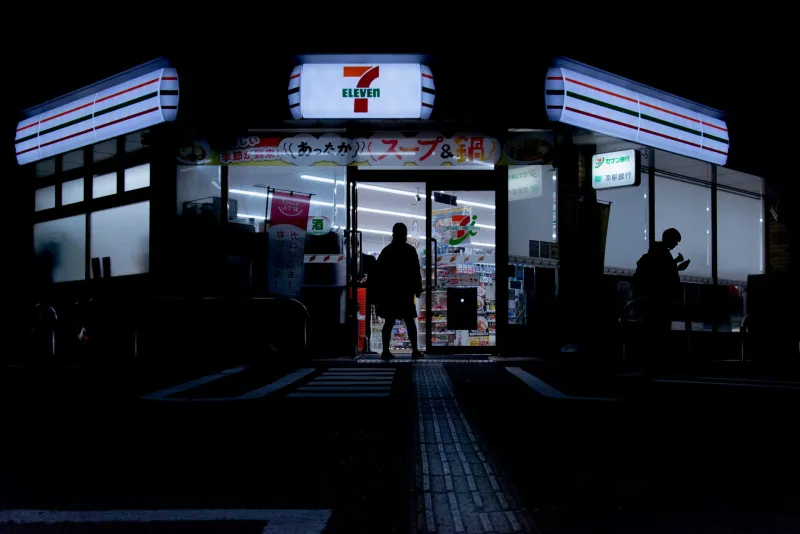
You might not expect a 24-hour convenience store to be the emotional center of a neighborhood. But in Tokyo, kombini clerks are quietly doing some of the heaviest lifting when it comes to human connection.
There's a FamilyMart near a mid-sized train station in western Tokyo where one particular clerk — a woman who's worked the morning shift for going on eight years — has developed what her regulars half-jokingly call "the gift." She can tell who's running late, who skipped breakfast, who's had a rough night. She doesn't pry. She doesn't make it weird. But she'll slip an extra packet of soy sauce into your bag when you look like you forgot, or pause just long enough during the transaction to let you exhale before the day starts.
Her regulars notice. They come back. Some of them, they've admitted, time their morning commute specifically to catch her shift.
That's not a small thing. In a city where loneliness is a documented public health concern — Japan appointed a Minister of Loneliness in 2021 — these micro-moments of recognition carry real weight.
Why This Matters More Now
Post-pandemic Tokyo is still recalibrating. Remote work reshuffled the rhythms of city life. Younger residents — many of whom moved to Tokyo from other prefectures and left their hometown networks behind — are navigating a city that can feel simultaneously electric and isolating. The neighborhood anchors who survived the disruptions of the last few years are, in many ways, more essential than ever.
What they offer isn't therapy. It isn't community programming. It's simpler and, in some ways, more powerful: proof that you're a recurring part of someone's world. That you matter enough to be remembered.
For a lot of people living in Tokyo — especially those far from family, still building their social footing — that proof is the difference between feeling like a resident and feeling like a stranger who just happens to pay rent here.
What American Cities Could Learn From This
In the US, we've spent decades designing cities around cars, efficiency, and individual convenience. Strip malls replaced corner stores. Drive-throughs replaced diners with regulars. The architecture of daily life quietly removed the friction — and with it, the connection.
Tokyo, for all its scale and speed, never fully lost its local texture. The shotengai (covered shopping street) still exists in neighborhoods that should, by every economic logic, have been swallowed by chain retail. The small ramen shop persists next to the franchise. The flower stand holds its corner.
Part of that is zoning. Part of it is culture. But a big part of it is the people themselves — the ones who decided that remembering someone's face, their order, their mood on a Tuesday morning, was worth the effort. Every single day.
A City Made of Small Recognitions
Fujita-san will probably retire in a few years. Yamamoto-san's flower stand may or may not survive the next round of rent increases. The morning kombini clerk could get transferred to another location next spring. These things happen.
But the neighborhoods they've shaped — the quiet warmth they've embedded into ordinary blocks — those tend to linger. Regulars become the next generation of anchors. The ramen shop's vibe gets absorbed by whoever takes it over, because the customers carry it in and expect it. Community, it turns out, is less about place and more about practice.
And in Tokyo, that practice is alive and well — one remembered order, one knowing nod, one extra moment at the register at a time.