They Remember Your Order Before You Do: The Quiet Intimacy of Tokyo's Kombini Counters
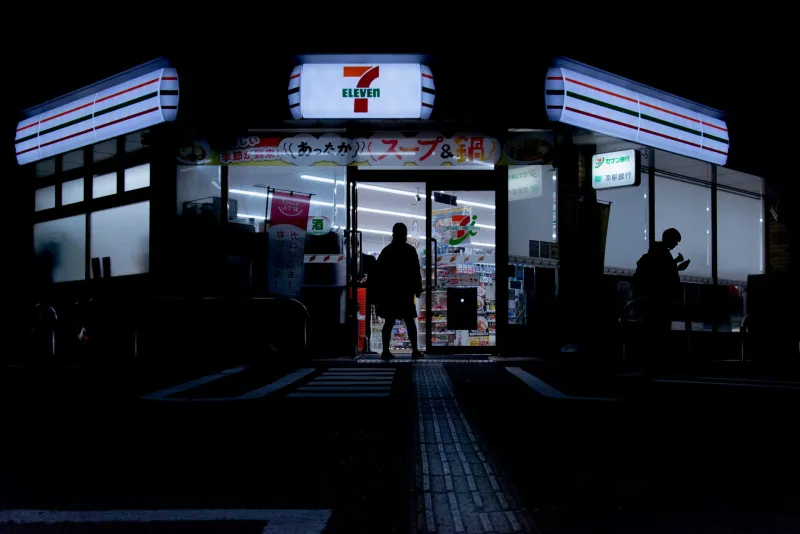
You probably haven't thought too hard about the person behind the register at your neighborhood FamilyMart. You go in, you grab your canned coffee and your onigiri, you tap your IC card, you leave. Thirty seconds, maybe less. But here's the thing — they noticed you. They noticed you yesterday, and the day before that, and the Tuesday you came in looking like you hadn't slept. And somehow, without either of you ever exchanging more than a few words, a relationship formed.
This is Tokyo. And the kombini counter might be one of the most quietly intimate spaces in the entire city.
More Than a Transaction
In most American cities, the idea of a "regular" at a convenience store doesn't carry much weight. You might nod at a cashier, sure. Maybe you're on a first-name basis at your local corner shop. But in Tokyo's dense, neighborhood-by-neighborhood patchwork of life, the kombini is woven into the daily rhythm in a way that's genuinely different.
People stop in multiple times a day — morning coffee before the train, a quick lunch, a late-night snack after overtime. The same faces behind the counter, the same choreography of small moments. Over weeks and months, those moments stack up into something that starts to resemble familiarity. Maybe even something warmer than that.
There's a word in Japanese — ma — that roughly translates to "negative space" or "meaningful pause." It's used in architecture, music, conversation. The idea is that what happens between things carries just as much weight as the things themselves. The silence between notes. The gap between words. Apply that to a kombini interaction and suddenly those thirty-second exchanges look a lot different. The space between "irasshaimase" and the beep of the scanner holds something real.
The Emotional Labor Nobody Talks About
Kombini workers in Japan are trained to an almost mythological standard of service. The precision, the politeness, the way they rotate products on shelves and heat your nikuman to exactly the right temperature — it's all part of a culture of hospitality that Americans often describe as "incredible" when they visit for the first time.
But what doesn't get talked about as often is the emotional dimension of that labor. These workers remember. Not because they're required to, but because paying attention is baked into how service works here. They notice when your usual brand of tea isn't in stock and point you toward an alternative without being asked. They remember that you always want your hot food in a separate bag. They catch the fact that you haven't come in for a few days and mention it, casually, the way a neighbor might.
For a lot of people living alone in Tokyo — and there are a lot of people living alone in Tokyo — that kind of low-key attentiveness is more consistent than almost anything else in their social lives.
The Loneliness Hiding in Plain Sight
Japan has a well-documented relationship with urban loneliness. The country even appointed a Minister of Loneliness back in 2021 in response to rising rates of social isolation. In Tokyo specifically, where you can live in an apartment building for years without learning your neighbors' names, human connection can feel like something you have to seek out intentionally — or catch in the margins of everyday life.
The kombini counter is one of those margins. It's not a friendship in any traditional sense. Nobody's texting each other, nobody's meeting up after work. But there's a consistency to it that a lot of formal relationships don't have. Your best friend from college might go weeks without checking in. The guy at the Lawson two blocks from your apartment is going to be there tomorrow morning, and he's going to hand you your coffee the way you like it, and for thirty seconds you're going to feel like someone in this city knows you exist.
That's not nothing. In fact, for a lot of people, that's quietly everything.
What Gets Shared Across the Counter
It's not just orders that get remembered. People talk — briefly, obliquely, in the way that Tokyo allows. You mention that you've been tired lately. You say something about the heat. You make a comment about the new seasonal snack they're stocking. And the worker responds, genuinely, and asks a follow-up question the next time you come in.
This is a form of intimacy that doesn't have a great Western equivalent. It's not the deep-dive vulnerability of therapy, or the effortful closeness of friendship maintenance. It's something smaller and more ambient — a kind of witnessed existence. Someone sees you show up, day after day, and reflects a version of your life back to you.
In some neighborhoods, especially the older shitamachi-style areas in places like Nerima or Koenji, this dynamic gets even more layered. The kombini slots into a pre-existing culture of neighborhood familiarity — the shotengai shop owners who know your family, the dry cleaner who asks about your mom. The convenience store becomes another node in that web, updated for the modern city.
A Ritual That Deserves More Credit
We tend to reserve the word "relationship" for things that take effort, that involve reciprocity and history and shared experience over time. But maybe that definition is too narrow. Maybe a relationship can also be the quiet accumulation of small recognitions — the kind that happen at 7-Eleven at 7:15 in the morning when you're barely awake and someone hands you exactly what you needed before you asked.
Tokyo has a way of teaching you that connection doesn't always look like connection. It shows up in the margins, in the ma, in the half-second of eye contact across a register. The kombini workers who carry this dynamic — often for years, often across hundreds of regulars — are doing something that deserves more than a quick scan and a tap-and-go.
Next time you're in, maybe slow down for a second. Not in a weird way. Just enough to notice that someone already knows your order. That's a kind of loyalty that most people spend years trying to earn.