Standing Still in a City That Never Stops: The Quiet Ritual of Tokyo's Train Platforms
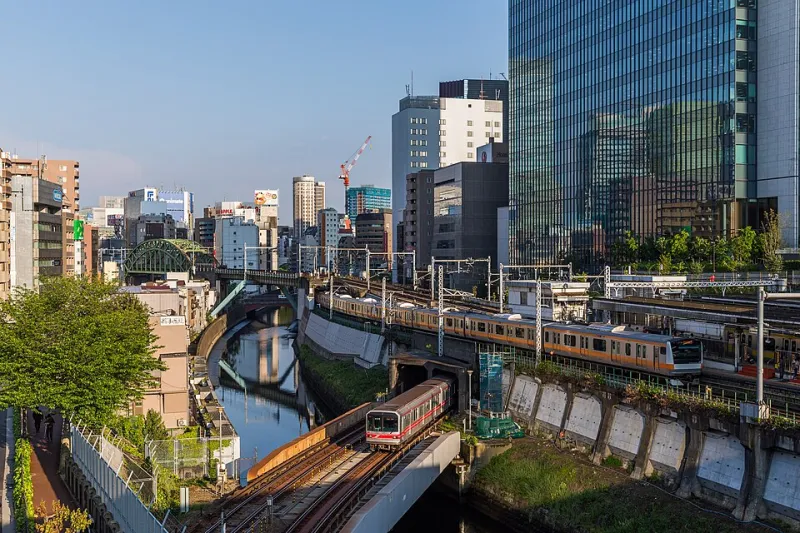
Photo: Kabelleger / David Gubler, CC BY-SA 4.0, via Wikimedia Commons
If you've ever stood on a platform at Shinjuku Station during rush hour — surrounded by thousands of people, all moving with quiet precision, nobody shoving, nobody yelling, phones mostly tucked away — you've felt it. That strange, almost inexplicable calm. Like the whole city just exhaled at once.
For a lot of Americans, that feeling is deeply confusing. We're used to transit being a contact sport. Subway platforms in New York or Chicago are loud, unpredictable, occasionally chaotic. You guard your space. You watch your bag. You mentally prepare for something to go sideways.
But Tokyo's train stations operate on an entirely different frequency. And once you tune into it, it starts to feel less like a commute and more like a practice.
The Platform as Sacred Space
Here's something that hits you fast when you arrive in Tokyo: the floors of most train platforms are marked with painted lines and footprint icons showing you exactly where to stand and how to queue. Nobody told you about this system before you arrived. Nobody hands you a pamphlet. But within a few minutes, you figure it out — because everyone around you is already doing it, quietly and without fuss.
That's not an accident. It's the result of decades of collective refinement, a kind of social engineering that doesn't feel engineered at all. The markers exist because the system works better when people use them. And people use them because, well, everyone else is. It's a loop of mutual respect that sustains itself.
In a lot of ways, that painted line on the floor is the closest thing Tokyo has to a social contract you can actually see.
Waiting as a Form of Presence
In the US, waiting tends to feel like failure. We fill every pause with our phones, our podcasts, our to-do lists. Standing still in a public space without a visible purpose makes a lot of Americans uncomfortable — like we're supposed to be somewhere else, doing something more.
Tokyo flips that script. The act of waiting on a train platform here carries a kind of dignity. You stand where you're supposed to stand. You watch the digital display count down the minutes. You don't crowd the doors before people have exited. You just... exist in the moment, ready to move when it's time.
It sounds almost meditative when you describe it that way, and honestly? It kind of is. There's a Japanese concept — ma — that roughly translates to the meaningful pause, the space between things. It shows up in music, in architecture, in conversation. And you can feel it on a Tokyo train platform if you're paying attention. The gap between trains isn't dead time. It's part of the rhythm.
The Architecture of Calm
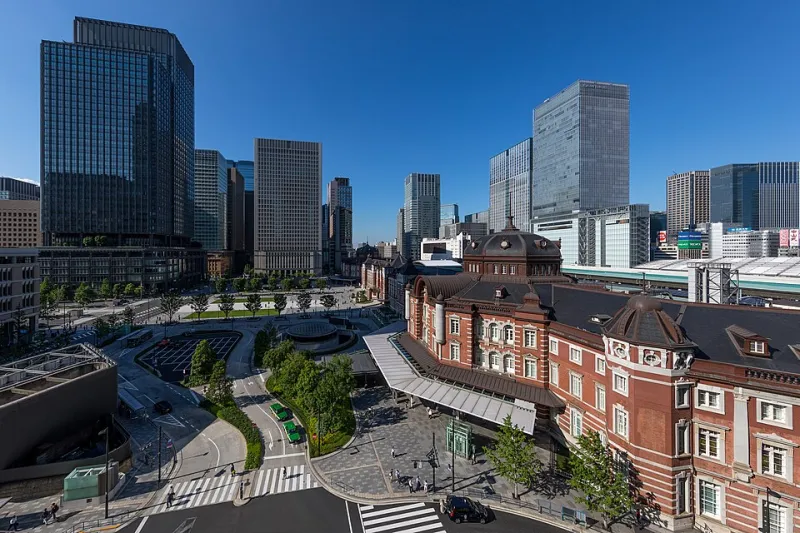
The physical design of Tokyo's major stations plays a huge role in this. Places like Tokyo Station, Shibuya, or Ikebukuro aren't just transit hubs — they're layered, intentional environments. Wayfinding signage is meticulous. Acoustic design keeps the noise from becoming overwhelming despite the sheer volume of people. Even the lighting tends toward something warmer and less institutional than what you'd find in, say, a typical American airport terminal.
And then there are the smaller details: the little jingle that plays before each train announcement (each line has its own unique melody), the platform staff who bow as trains arrive, the near-surgical precision of doors opening exactly where the queue lines end. All of it communicates the same thing — you are expected here, and we have prepared for you.
That sense of being anticipated, of arriving into a system that has already accounted for your presence, is genuinely comforting in a way that's hard to articulate until you've experienced it.
The Unwritten Rulebook Nobody Gave You
Of course, the flip side of all this order is that there are a lot of unwritten rules. Don't talk loudly on your phone. Set your ringer to silent. Don't eat (on most lines). Don't apply makeup (technically fine, but frowned upon in many contexts). Stand on the correct side of the escalator depending on which city you're in — yes, it's different in Osaka.
For first-time visitors, this can feel a little like wandering into a dinner party where everyone knows each other and you missed the dress code memo. But here's the thing: nobody's going to glare at you if you make a mistake. The system absorbs minor infractions gracefully, because the vast majority of people are already doing their part to keep things running smoothly.
What's fascinating is how this collective compliance doesn't feel oppressive. It feels like courtesy. Like everyone around you is quietly saying, I see you, and I'm making space for you. In a city of 14 million people, that's not a small thing.
What the Station Actually Is
The longer you spend in Tokyo, the more you start to realize that the train station is one of the few places in the city where all the social layers collapse a little. Salarymen in pressed suits stand next to high school kids in elaborate fashion fits. Elderly women with shopping bags queue up next to tourists dragging rolling luggage. Everyone is subject to the same painted lines, the same countdown clock, the same jingle.
There's an equality to it that feels genuinely rare. The platform doesn't care who you are. It just asks that you show up, wait your turn, and move when it's time.
For a city that can sometimes feel opaque to outsiders — where so much of community life happens behind closed doors or in spaces that require a local to guide you — the train station is refreshingly legible. It's public in the truest sense. And it rewards patience in a way that most public spaces in America simply don't.
The Lesson You Didn't Know You Were Learning
Maybe that's the real gift of Tokyo's train culture: it teaches you, through sheer repetition, that waiting is not wasted time. That stillness can be purposeful. That moving through a city with care for the people around you isn't a sacrifice — it's actually kind of beautiful.
If you find yourself in Tokyo, try this: put your phone away on the platform. Watch the display. Listen for the jingle. Stand on your mark. Let the train come to you.
You might be surprised how good it feels to simply be somewhere, doing nothing but waiting, in a city that has somehow made an art of it.