Faded Paint and Full Hearts: Why Tokyo's Untouched Neighborhoods Are the New Cool
There's a certain kind of building in Tokyo that real estate agents have learned to describe very carefully. The ceilings are low. The hallways smell faintly of old wood and cooking oil. The mailboxes are hand-labeled in kanji that's starting to flake. And on any given weekend afternoon, there's a twenty-three-year-old with a film camera standing outside it, waiting for the light to hit the rust stains just right.
This is not an accident. It's a movement — quiet, unorganized, and spreading faster than anyone expected.
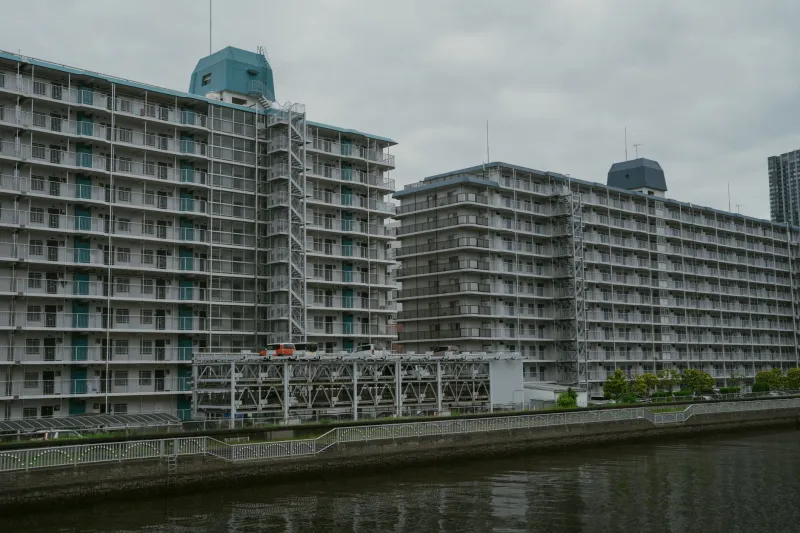
Across Tokyo's older residential wards, pockets of the city exist in a kind of suspended animation. Neighborhoods where the corner hardware store hasn't changed its sign since the Showa era. Apartment complexes — danchi, the big public housing blocks built in waves during Japan's postwar economic boom — still standing in their original form, their exteriors weathered to a shade somewhere between cream and resignation. These places weren't preserved intentionally. They just... didn't get renovated. And now, that accidental stillness has become one of the most magnetic qualities a Tokyo neighborhood can have.
The Aesthetic of Forgetting
Americans have their own version of this. Think of how Detroit's abandoned architecture became a subject of obsessive photography. Or how certain Brooklyn blocks were celebrated precisely because they hadn't been touched by a developer yet. There's something deeply human about finding beauty in the overlooked — in the places a city moved on from but didn't bother to tear down.
In Tokyo, that impulse takes on a specific texture. The buildings aren't crumbling in dramatic ways. They're just... unchanged. A laundromat with original Showa-era signage. A kissaten — an old-school coffee shop — where the menu board is handwritten and the seats are original vinyl, split at the seams and re-taped so many times the repair is itself a kind of history. A narrow alley where every storefront is a different decade, layered like sediment.
For Gen-Z Tokyoites and millennials who grew up watching the city's older spaces disappear in favor of glass-fronted condos and chain convenience stores, these untouched corners feel almost sacred. "It's not nostalgia exactly," says one twenty-six-year-old photographer who regularly makes the train ride out to older neighborhoods in Nerima and Adachi wards specifically to shoot danchi. "It's more like... proof. Proof that the city had a different life before all this."
The Danchi Pilgrimages
If you want to understand this phenomenon, start with danchi culture. These large-scale public housing complexes were built throughout the 1950s, '60s, and '70s to house Japan's rapidly urbanizing population. At their peak, they were symbols of modern aspiration — small, functional apartments with indoor plumbing and elevators, which wasn't a given for everyone at the time. Families moved in and, in many cases, never left. The buildings aged around them.
Today, many danchi are aging alongside their original residents. Populations have thinned. Some units sit empty. The communal spaces — the small parks between buildings, the laundry lines on the balconies, the little covered walkways — feel both intimate and melancholy in a way that's hard to photograph without feeling like you're intruding on something private.
But people are going. Weekend trips to photograph danchi have become a recognizable subculture in Tokyo. There are Instagram accounts dedicated to them. Zines. Walking maps passed around in DMs. The aesthetic has a name — showa retro — and while that label gets applied to all kinds of vintage-inspired content, the danchi version feels rawer than the curated retro cafes selling it back to you at a markup.
These aren't sets. They're lived-in spaces where someone's grandmother is still hanging her laundry.
What Authenticity Actually Costs
Here's where it gets complicated, and where the conversation starts to sound familiar to anyone who's watched a neighborhood in Brooklyn or East Austin or Highland Park go through the cycle.
When young people start romanticizing a neighborhood's decay, they're often not the ones who have to live in it. The residents of Tokyo's older, unrenovated apartments aren't there because they find the peeling paint charming. They're there because the rent is lower, because they've lived there for decades, because moving is hard and expensive and disorienting at any age but especially when you're elderly and your neighborhood is the architecture of your entire adult life.
The photographers and the zine-makers and the weekend pilgrims bring attention. Attention brings interest. Interest, eventually, brings developers — or at least the kind of coverage that makes developers pay attention. It's a pattern that plays out in cities everywhere, and Tokyo is not immune to it.
Some neighborhood advocates in areas like Nerima and Itabashi have started pushing back gently — not against the interest itself, but against a version of it that treats living communities like museum exhibits. "Come, look, appreciate," one local community board member told a neighborhood paper last year. "But remember there are people inside those buildings who have opinions about being photographed."
The Preservation Question
Not everyone involved in the danchi and retro-neighborhood scene is just there for the photos. A quieter contingent is asking harder questions about what it would actually mean to preserve these spaces — not freeze them in amber, but keep them functional and inhabited rather than demolished and replaced.
In a few cases, local governments and community organizations have experimented with adaptive reuse: danchi units converted into shared workspaces or community kitchens while keeping residents in place. Some old shotengai — the covered shopping streets that were Tokyo's commercial backbone before malls — have been revitalized not by bringing in new chains but by actively recruiting young independent business owners who want exactly the kind of character that only comes from a building that's been standing for fifty years.
These projects are small. They don't scale easily. But they suggest a version of the romanticization that gives something back — that treats the appeal of these neighborhoods as a resource to be shared rather than consumed.
Still Standing, Still Saying Something
There's a building in one of Tokyo's outer wards — no need to name it, because there are versions of it in a dozen places — where the exterior wall has been repainted exactly once since it was built, and the paint is now the color of old paper. The residents have a small garden going in the courtyard, tomatoes in summer, chrysanthemums in fall. Someone has left a ceramic frog by the entrance for what looks like decades.
It's not beautiful in any conventional sense. But it says something that the glass towers nearby don't. It says: people lived here. They made it theirs. They're still here.
That's what's drawing the cameras, the zines, the weekend train rides from Shibuya and Shinjuku. Not decay for its own sake, but the evidence of continuity — proof that a city can hold its history in its walls if it just resists the urge to tear them down.
Tokyo is a city that reinvents itself constantly, and that's part of what makes it extraordinary. But the neighborhoods that didn't reinvent themselves? They might be telling the more interesting story.