After Hours and All In: How Tokyo's Hobby Districts Became the City's Most Honest Neighborhoods
It's a Tuesday evening in Nakano, and a man in a pressed white dress shirt is holding a 1983 die-cast Mazinger Z figure like it's something sacred. He's probably in his mid-forties. His briefcase is wedged between his feet. He hasn't loosened his tie yet. And he is completely at peace.
Nobody in the shop is looking at him sideways. Nobody is snickering. The teenager behind the counter is helping him check the box for paint wear with the same focused professionalism you'd expect from someone appraising a wristwatch. This is just Tuesday in Tokyo.
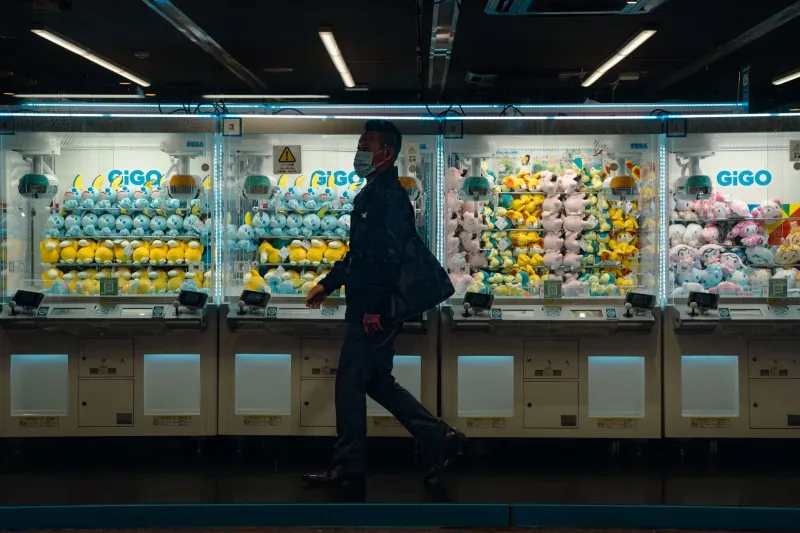
If you've spent any time wandering the city's more eccentric corners, you've probably noticed it: the perfectly normal-looking adult crouched in front of a glass case full of Gundam kits, the salaryman thumbing through a bin of vintage manga with the intensity of a grad student doing archival research, the woman in office attire debating the merits of two different limited-edition plushies with a store clerk who clearly respects the gravity of the decision. Tokyo has built entire neighborhoods around this kind of passion — and what's happening inside them says a lot more about the city than most guidebooks will tell you.
The Neighborhood as Permission Slip
In the US, adult hobbyists often exist in a kind of cultural gray zone. Comic cons are celebrated, sure, but there's still a faint cultural pressure to frame your love of collectibles or gaming as ironic, nostalgic, or at least secondary to your "real" identity. Tokyo doesn't bother with that negotiation.
Places like Akihabara, Nakano Broadway, and Ikebukuro's Sunshine City aren't just shopping destinations — they function more like cultural zones where the social rules quietly shift. Inside these districts, your profession, your age, and your salary bracket become almost irrelevant. What matters is whether you know your stuff.
Akihabara gets most of the international attention, and for good reason. The density of hobby shops, electronics boutiques, figure stores, and retro game dealers packed into a few city blocks is genuinely staggering. But Akihabara can feel overwhelming — a little like trying to drink from a fire hose. Nakano Broadway, quieter and more maze-like, is where a lot of serious collectors prefer to go. The vibe there is more focused, more deliberate. Less spectacle, more craft.
Nakano Broadway's upper floors are a kind of collector's labyrinth — narrow corridors lined with shops that specialize so specifically you start to wonder how any of them survive. One store sells only vintage tokusatsu merchandise. Another deals exclusively in 1970s and '80s anime cels. A third focuses on out-of-print game soundtracks on vinyl. And all of them are staffed by people who take the inventory as seriously as any museum curator.
The Salaryman's Other Self
Japan's work culture is, famously, intense. Long hours, rigid hierarchies, the pressure to subordinate personal identity to professional role — it's a system that extracts a lot from people. What hobby districts offer, in a very real sense, is a place to remember who you are outside of that system.
There's a concept in Japanese culture sometimes described as honne versus tatemae — your true feelings versus the face you present in public and professional life. Hobby districts are one of the few spaces in Tokyo where honne gets to come out and play. The collector who spends his lunch breaks researching prewar toy prices online but keeps it off his LinkedIn profile — he's not hiding a secret so much as protecting something private. And then, on a Tuesday evening, he gets to be fully himself for a few hours.
What's striking, if you spend enough time in these neighborhoods, is how social they are. American stereotypes about collector culture often skew toward isolation — the lone figure in a basement surrounded by boxes. Tokyo's hobby districts are the opposite. People talk. They argue, in the most respectful way, about which era of a toy line was superior. They help each other authenticate pieces. They share tips about which shops just got a new shipment. There's a community infrastructure here that's been quietly building for decades.
Why the Neighborhood Itself Matters
It's worth asking why the place matters so much — why not just buy everything online and be done with it? The answer, if you talk to regulars, almost always comes back to something experiential and communal that a shopping cart can't replicate.
Finding a rare piece in a physical store has a different texture than clicking "buy now." The serendipity of it, the physical handling of the object, the brief conversation with a shop owner who can tell you exactly where it came from — these things accumulate into something that feels meaningful. And being surrounded by other people who get it, who don't need it explained to them, creates a kind of ambient belonging that's genuinely hard to manufacture online.
There's also something worth noting about how these districts are embedded in their surrounding neighborhoods. Nakano Broadway sits inside a larger covered shopping arcade that locals use for groceries and everyday errands. The hobby shops exist alongside laundromats and noodle restaurants. This isn't a sanitized theme park version of fandom — it's woven into the actual fabric of the neighborhood, which gives it a groundedness that more purpose-built entertainment zones often lack.
What Tokyo Got Right
The US has certainly tried to create similar spaces — certain blocks in cities like Los Angeles, Chicago, and New York have developed identities around comics, gaming, or collectibles. But they tend to feel more fragile, more subject to gentrification pressure, more dependent on a single anchor store that, if it closes, takes the whole ecosystem with it.
Tokyo's hobby districts have persisted partly because the demand is genuine and multigenerational, and partly because the city has a cultural tolerance for hyper-specialization that allows wildly niche businesses to survive. When a store can focus exclusively on one very specific category of collectibles and still find enough customers to stay open for thirty years, you know the interest runs deep.
More than that, though, Tokyo seems to have figured out something that a lot of cities are still working on: that adults need spaces to be unserious. Not ironic about it, not apologetic — just genuinely, openly enthusiastic about something that brings them joy. That's not a small thing.
Back in Nakano, the man with the Mazinger Z figure has made his decision. He's buying it. He carries it to the counter with both hands, and the teenager rings it up without ceremony, wraps it carefully, and hands it over in a paper bag. The man tucks it under his arm alongside his briefcase and walks back out into the evening crowd.
He looks, honestly, like a person who just got exactly what he needed.