The Second Locker: How Tokyo's Capsule Hotels Became the City's Most Private Real Estate
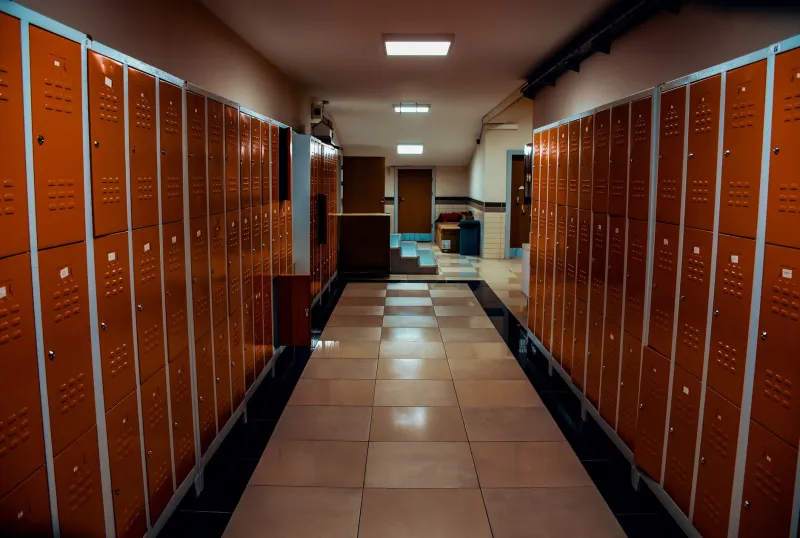
Walk into the right capsule hotel in Shinjuku on a Tuesday night and you'll notice something that doesn't quite add up. The man in the corner isn't fumbling with a rolling suitcase. He's not checking his phone for the next morning's flight. He's just... comfortable. He knows where the towels are. He knows which locker is his. He's been coming here for three years.
Tokyo has always been a city of compartments — train cars, bento boxes, tiny apartments stacked in towers. But somewhere along the way, the capsule hotel quietly became the most interesting compartment of all.
Not a Budget Move. A Lifestyle Choice.
For most Americans, capsule hotels read as novelty or necessity — something you try once for the Instagram moment, or book in a panic after missing the last train. That's a fair read if you're visiting. But spend enough time in neighborhoods like Kabukicho, Ueno, or even the quieter corners of Nerima, and a different picture starts to form.
A significant number of regular capsule hotel guests aren't travelers at all. They're locals. Specifically, they're workers — often middle-aged, often married — who have carved out a semi-permanent arrangement at these places. Not every night. Maybe once or twice a week. Enough to justify a dedicated locker. Enough to feel, in some small and guarded way, like a second home.
The locker is the thing. That's where it all lives.
What's in the Locker
Ask around — carefully, because this isn't something people advertise — and you start to hear variations on the same story. One man keeps a set of fishing gear he bought fifteen years ago. His wife thinks he sold it. Another has a small collection of vinyl records, a portable player, and a notebook where he writes things he'd never say out loud. A third stores a second wardrobe: casual clothes, sneakers, a beat-up denim jacket that would raise questions at the dinner table.
None of this is scandalous in the way you might assume. There's no secret family, no dramatic double life. It's quieter than that, and in some ways more interesting. It's about the parts of yourself that don't fit neatly into the role you've been assigned — husband, father, section chief, reliable presence at the Monday morning meeting.
Tokyo's social architecture doesn't leave a lot of room for the self that existed before the job, before the mortgage, before the kids started school. The capsule hotel, for these men, is where that self gets to breathe a little.
The Neighborhood Makes the Ritual
The location matters more than you'd think. A capsule hotel in Akihabara draws a different crowd than one near Ikebukuro or tucked behind a shotengai in a residential ward. The ones that develop loyal, returning clientele tend to be in neighborhoods with a little personality — places where you can grab a beer at a counter bar, flip through a used bookshop, eat something good and cheap without making a reservation.
Nerima, for all its reputation as a quiet, residential ward, has its own version of this. Smaller scale, sure. But the logic holds: a neighborhood where you're not quite anonymous but not quite known either is exactly the kind of place where a second routine can take root. You become a regular at the ramen spot two blocks over. The guy at the front desk stops asking for your name. The city folds you in without making a big deal about it.
That low-key acceptance is, in a lot of ways, the whole point.
What It Costs to Keep a Secret (Not Much)
Permanent locker rentals at capsule hotels vary, but the economics are surprisingly accessible. Monthly fees for storage can run anywhere from a few hundred to a couple thousand yen depending on the facility. Nightly rates for the capsule itself hover around 3,000 to 4,500 yen — roughly $20 to $30 USD — which is genuinely cheap by Tokyo standards. For the price of a couple of fancy coffees back in the States, you can disappear for a night.
That affordability is part of what makes the whole arrangement feel so distinctly Tokyo. This isn't a luxury. It's not a spa retreat or a wellness weekend. It's a practical solution to a very human problem: the need for a space that is entirely, uncommittedly yours.
The Etiquette of Not Asking
One thing that strikes outsiders about these spaces is how well everyone understands the unspoken rules. You don't ask why someone is here. You don't comment on how often you've seen them. You make room at the shared sink, keep your phone on silent in the sleeping area, and mind your own quiet business.
It's the same social grammar you find in a lot of Tokyo spaces — the kombini at 2 AM, the solo-seat ramen counter, the late-night train. There's a collective agreement that certain spaces exist outside of normal social accounting. Nobody is keeping score. Nobody is going to bring it up later.
For regulars, that atmosphere isn't incidental. It's the whole reason they come back.
A City That Lets You Carry More Than One Version of Yourself
There's something worth sitting with here, especially if you're coming at this from a Western frame. American culture tends to treat the self as singular, coherent, something you present consistently across every context. Tokyo has a different understanding. The self is contextual. The version of you that shows up for work is not the same as the version that goes fishing alone or listens to records in a capsule at midnight. Both are real. Neither cancels the other out.
The capsule hotel, in this light, isn't a place where people go to hide. It's a place where they go to be more fully themselves — just the parts that don't have anywhere else to go.
There's a locker in Shinjuku right now with someone's whole other life folded neatly inside it. A jacket. A book. Maybe a pair of headphones and a playlist that nobody else has ever heard. The key is on a keychain in someone's pocket, worn smooth from years of handling.
That's not sad. Honestly, it might be the most Tokyo thing there is.