Pages After Midnight: The All-Night Bookshops Where Tokyo's Lonely and Sleepless Find Each Other
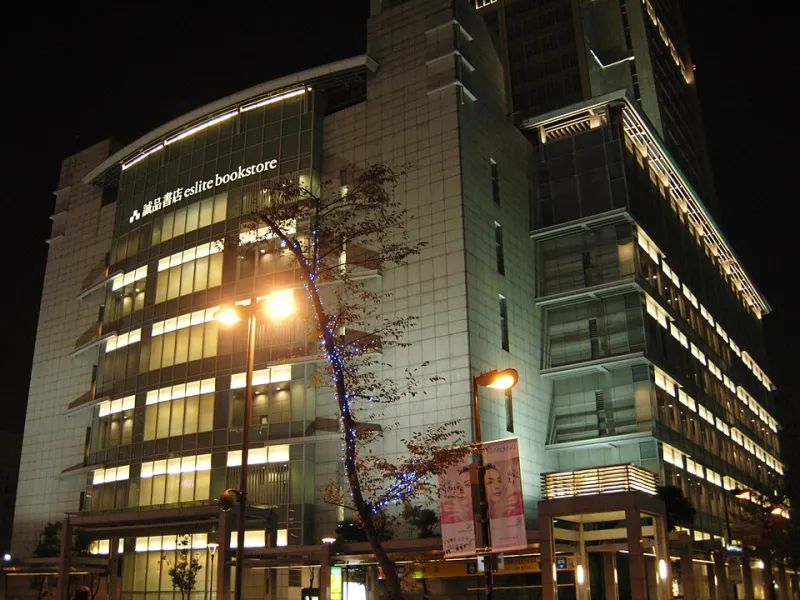
Photo: Taiwan Junior, CC BY-SA 3.0, via Wikimedia Commons
Most cities go dark and call it a night. Tokyo just... shifts. The izakayas thin out, the salarymen shuffle home, and then a different kind of person emerges — the nurse finishing a double shift, the university student who can't face their apartment, the insomniac who's given up on sleep and decided to do something useful with the dark hours. And quietly, reliably, there are places waiting for them.
Not bars. Not convenience stores — though those have their own magic. We're talking about bookshops that never close, and the small community lending libraries tucked into neighborhood corners that have become something far more interesting than their square footage suggests.
The Kind of Store That Doesn't Need a Yelp Page
You won't find most of these places trending on social media. They don't run Instagram ads or host celebrity author events. Some are barely marked at all — a hand-lettered sign, a cluster of shelves visible through a sliding glass door, a single lamp burning in a residential alley. In neighborhoods like Koenji, Sangenjaya, and parts of Nerima, these spots have existed for years, sustained almost entirely by word of mouth and the loyalty of people who stumbled in once and never really left.
What makes them different from your average late-night haunt is the specific kind of quiet they offer. There's no pressure to order another drink, no DJ set climbing in volume, no ambient anxiety about whether you're having enough fun. You show up. You browse. You sit if there's a chair. Sometimes you talk to whoever's behind the small counter. Sometimes you don't say a word for two hours, and that's completely fine.
For a lot of regulars, that's exactly the point.
Unspoken Rules, Understood Immediately
Every micro-community has its own social code, and the late-night bookstore scene is no different — it's just that nobody wrote it down. Walk into one of these places at 1 AM and you'll absorb the rules within minutes. Voices stay low. Phones go face-down or get pocketed. You don't hover over someone who's reading. You don't ask the person at the counter to recommend something unless they make eye contact first and there's a natural opening.
Think of it less like a library and more like a jazz club where the music is silence and everyone's in on it.
That shared understanding is part of what creates the bond. People who find themselves in a 24-hour bookshop at 2 AM have self-selected into a specific kind of company. They're not there to be loud or seen. They're there because the night got long and books felt like the right answer. That shared logic — unspoken but obvious — is its own form of intimacy.
The Lending Library Twist
Some of the most interesting versions of this scene aren't commercial at all. In several Tokyo neighborhoods, small community lending setups have appeared in the entryways of apartment buildings, the corners of coffee shops that close at 9 but leave their door cracked, and even the covered seating areas outside local shotengai shops. A shelf of books, an honor system, maybe a notebook where you write your name and what you borrowed.
These aren't run by any city program. They're maintained by individuals — often retirees, sometimes a rotating group of neighbors — who just decided the block needed a place where books could move freely. The social infrastructure that builds up around them is low-key remarkable. Regulars start leaving notes inside books. Someone tucks a recommendation card between two volumes. A conversation that started over a shared copy of a Haruki Murakami novel turns into a standing weekly chat.
In a city where apartment walls are thin but social distance can feel enormous, these informal lending spots have a way of making the neighborhood feel like something you actually belong to.
Who's Actually There at 3 AM
Spend enough time in these spaces and you start to notice the regulars. Night-shift hospital workers who decompress over paperback mysteries before heading home on the first train. Graduate students from nearby universities who've been staring at the same research paper for six hours and need their brain to do something different. Older men who've been coming to the same shop for fifteen years and have a specific chair they gravitate toward without anyone having to say so.
And increasingly, younger people — particularly in their twenties — who are consciously opting out of bar culture and looking for social spaces that don't require a drink in their hand. For this crowd, the all-night bookshop isn't a fallback. It's a preference. A place where you can be around people without having to perform being around people.
For Americans used to the idea that community happens at loud venues or organized events, this might feel counterintuitive. But there's a long tradition in Tokyo of finding belonging in shared stillness — and the bookshop-after-midnight scene is one of its most alive current expressions.
What the Shelves Actually Say
Here's something worth noticing: the curation in these places tends to be deeply personal. Because most of them are run by one person, or a tiny team, the shelves reflect an actual sensibility. You'll find old manga next to translated American fiction next to philosophy paperbacks that look like they've been read twelve times. The organization sometimes follows a logic you have to decode — not alphabetical, not by genre, but by something more like mood or association.
Browsing becomes an act of getting to know someone. And when the owner or volunteer on duty notices what you're gravitating toward, the conversation that sometimes follows can go places you didn't expect at midnight on a Tuesday.
A Different Kind of Third Place
Sociologists have this concept of the "third place" — the spot in your life that's neither home nor work, where community actually forms. For decades, people assumed that meant coffee shops or bars or community centers. Tokyo's late-night bookshops suggest the category is wider than that.
A third place doesn't need to be loud or well-lit or full of people. It just needs to be somewhere you can show up, be yourself, and find others doing the same. At 3 AM, surrounded by shelves and low lamplight, with a stranger two seats over turning pages at the same pace you are — that qualifies.
The city keeps offering these pockets if you know how to look. And sometimes the best way to find your people is to follow the light that's still on when everything else has gone dark.