Listen to Tokyo: The Hidden Sound Map of a City That Speaks in Layers
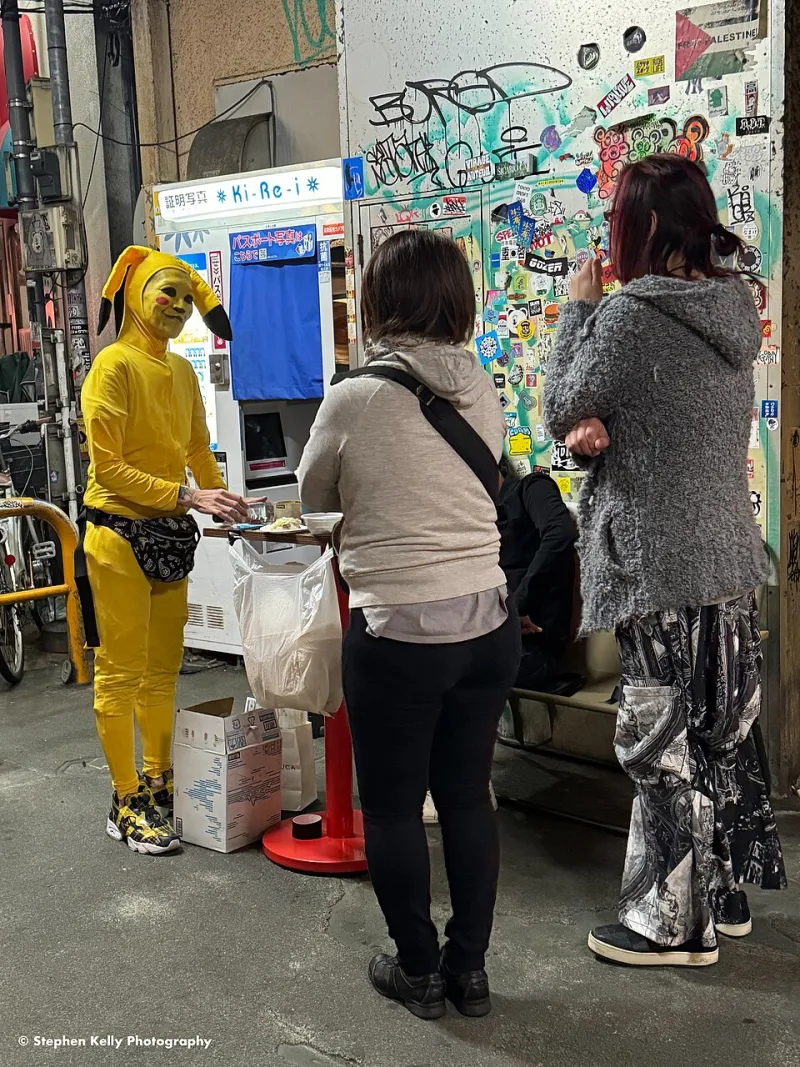
Photo: Tokyo neighborhood street scene urban life Japan sounds city atmosphere, via www.datocms-assets.com
Close your eyes somewhere in Tokyo — really close them — and you'll realize something quickly: this city is never, ever quiet. But more than that, it's never the same kind of loud. The noise of Shinjuku at 11pm is completely different from the noise of Shinjuku at 7am, and both of those are completely unlike the soundscape of a neighborhood ten minutes away by train.
Tokyo doesn't have one voice. It has dozens. And learning to hear them is one of the most underrated ways to actually understand what's going on in this city.
Ikebukuro: The Controlled Chaos Frequency
Start with Ikebukuro, because Ikebukuro doesn't ease you in. It hits.
The pachinko parlors along the main drag blast their signature wall of sound — a dense, overlapping cascade of steel balls, electronic jingles, and machine feedback that's somehow both chaotic and rhythmic. It's the kind of noise that, if you heard it on a film soundtrack without context, you'd assume signaled danger. In Ikebukuro, it signals commerce.
But step half a block off the main strip and the frequency drops. You catch the clatter of a ramen shop — the clang of ladles, the hiss of steam, a cook calling out an order in shorthand Japanese that regular customers understand perfectly. Two blocks further and you're in a quieter residential pocket where the dominant sound is actually the absence of the main street, punctuated by the occasional crow (Tokyo's crows are legendarily loud and absolutely unintimidated by humans).
Ikebukuro's soundscape tells you it's a neighborhood in negotiation — commercial energy and residential life existing in genuine tension, each claiming its acoustic territory.
Asakusa: Time Traveling Through Sound
Asakusa sounds like somewhere that hasn't entirely decided what century it's in, which is part of what makes it magnetic.
In the early morning — and you should go early, before the tour groups arrive — the neighborhood is defined by temple bells. Senso-ji's bells carry in a way that feels almost architectural, like the sound itself is a structure you're walking through. Beneath that, incense smoke and the low murmur of people praying. Wooden sandals on stone. A vendor setting up their stall with a practiced efficiency that sounds like a very specific percussion.
By midday, the tourist layer arrives — rolling suitcases on cobblestones, the tinny speakers of rickshaw operators offering rides in English and Mandarin, the sharp crack of street food being plated. It's louder, but the underlying Asakusa sound doesn't disappear. It just gets covered, like a melody beneath a louder arrangement. Locals here seem to move through the noise with a kind of practiced selective hearing, tuned to the frequencies that matter to them and filtering out the rest.
For American visitors used to tourist districts that fully surrender their identity to foot traffic, Asakusa's acoustic layering is genuinely striking. The neighborhood sounds like itself even when it's crowded with people who aren't from it.
Shimokitazawa: The Frequency of Intentional Cool
Shimokitazawa is a live music neighborhood, and that fact shapes everything about how it sounds.
Even on a Tuesday afternoon, there's music leaking from somewhere — a bassist running scales through a rehearsal room vent, a guitar store employee testing an amp, a coffee shop playlist bleeding out through a propped-open door. The sounds here are curated in a way that feels almost performative, like the neighborhood is always slightly in the middle of a show.
But the most interesting Shimokitazawa sounds are the small ones. The scrape of a vintage record being pulled from a crate. The specific acoustic warmth of a bar that's been absorbing live music for thirty years and holds it in its walls. The way conversations here seem to happen at a slightly lower volume than in other neighborhoods, as if everyone is instinctively leaving room for the music.
Shimokitazawa's soundscape is the audio equivalent of a carefully assembled outfit — nothing accidental, everything considered.
Nerima: The Sound of Actually Living
Nerima sounds different from all of them, and that difference is the point.
This is a residential neighborhood in the truest sense — families, longtime residents, local shops that have been there for decades. The sounds here are domestic and cyclical. Morning radio drifting from an open kitchen window. The metallic clatter of a bicycle basket as someone rides to the train station. Kids on the way home from school, loud in that specific way that kids are loud when they feel safe.
There are no pachinko machines in the immediate residential pockets of Nerima. The tourist amplification of Asakusa doesn't exist here. What you get instead is the sound of a neighborhood that functions for the people who actually live in it — and there's something quietly radical about that in a city where so many neighborhoods have been acoustically colonized by commerce or tourism.
For anyone who's spent time in a major American city watching neighborhoods get progressively louder and more performative as they gentrify, Nerima's sound feels like a reminder of what urban life can be when it doesn't need to market itself.
What Sound Actually Tells You
Japanese concepts of ambient awareness — the way that background sound, or kankyō-on (environmental sound), is understood as carrying meaning and emotional weight — don't map perfectly onto American cultural frameworks. In the US, ambient noise tends to be something to cancel out (hence the billion-dollar noise-canceling headphone industry). In Japan, and especially in Tokyo, it's often something to read.
Locals use sound to orient themselves. The melody that plays when a train is approaching. The specific chime of a particular convenience store. The evening broadcast that plays through neighborhood speakers in some residential areas — a gentle, almost parental reminder that it's getting late and children should head home.
These sounds aren't incidental. They're infrastructure.
How to Actually Listen
If you want to experience Tokyo's sound map for yourself, the most important thing is to put your phone in your pocket. Not on silent — actually away. Then slow down. Stand somewhere for five minutes without a destination. Let the layers separate.
You'll start to hear things you've been walking past: the specific acoustic personality of a covered shopping arcade versus an open street, the way a shrine courtyard dampens city noise in a way that feels almost intentional, the low-frequency hum of the city's train infrastructure that you feel as much as hear.
Tokyo rewards the people who pay attention. And it turns out, the city has been trying to tell you exactly who it is — you just have to be willing to listen.