Learn It From a Stranger: Inside Tokyo's Quietly Radical Skill-Sharing Underground

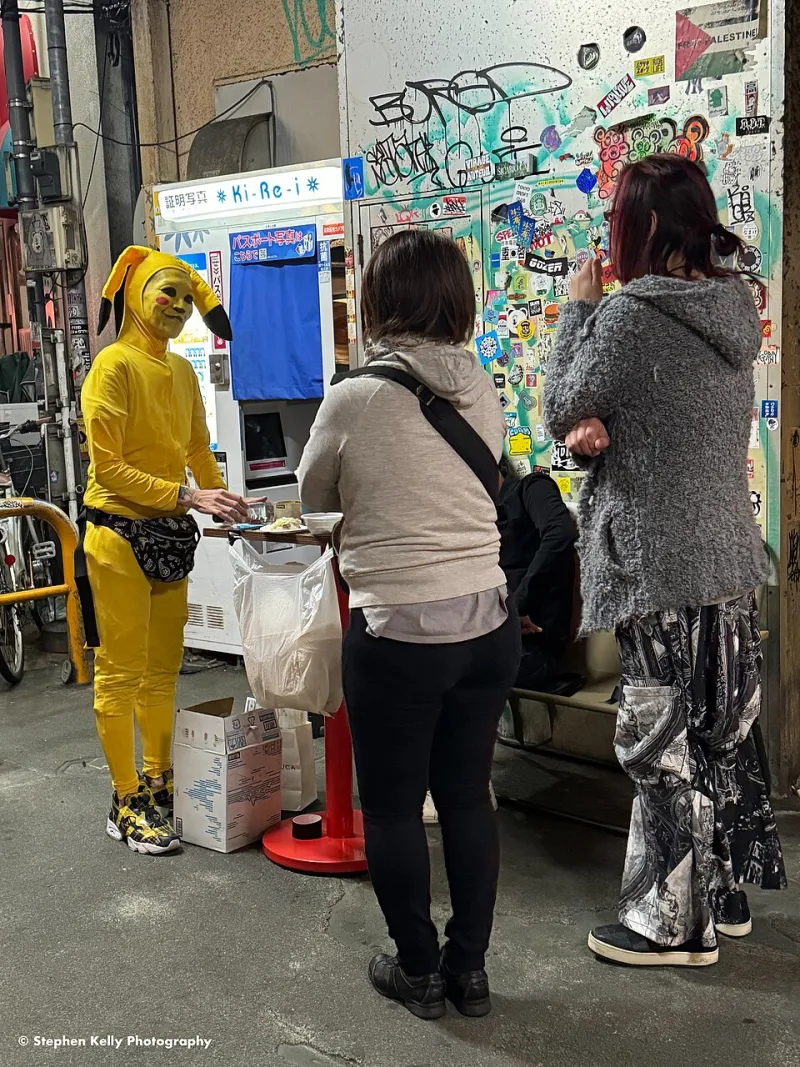
Photo: small group craft workshop bookbinding Tokyo neighborhood, via image.pngaaa.com
The flyer is photocopied, slightly crooked, and taped to the inside of a used bookshop window in Shimokitazawa. It reads, in careful bilingual text: Hand-bound books workshop. Six people max. Bring nothing. Know nothing. Sunday, 2 p.m. There's a handwritten address and a name — Mori-san — but no website, no Instagram handle, no price listed.
This is, more or less, how you find your way into Tokyo's skill-sharing underground.
It's a scene that doesn't market itself aggressively, doesn't have a unified brand, and resists easy categorization. But spend enough time poking around the quieter corners of Tokyo's neighborhoods — the art supply shops of Koenji, the rehearsal room hallways of Ikebukuro, the fermentation-obsessed kitchen collectives of Nakameguro — and you start to notice a pattern. People teaching people, in small rooms, for the love of the thing.
The Anti-MasterClass
Americans have become fluent in the language of online skill acquisition. MasterClass. YouTube tutorials. Skillshare subscriptions that go unused after the second month. We've never had more access to instruction, and arguably we've never felt less connected to the people teaching us.
What's happening in Tokyo's neighborhood skill-sharing circles is almost a deliberate inversion of that model. The groups are small by design — rarely more than eight people. The teachers are not credentialed professionals but enthusiastic practitioners, people who have simply spent years doing a thing and want to pass it on. The settings are intimate: living rooms, back rooms of cafes, borrowed studio space on Sunday afternoons.
And almost universally, the exchange of money is either minimal or conspicuously absent.
"If I charged properly for my time, people would expect a curriculum," says Mori-san, the bookbinding facilitator from the Shimokitazawa flyer, measuring a length of waxed thread with the casual authority of someone who's done this ten thousand times. "I don't want to teach a curriculum. I want to teach this — the way I learned it, from mistakes."
Her workshop today has five participants: a graphic designer, a retired postal worker, a twenty-two-year-old who found the flyer the same way we did, and two friends who drove in from Saitama specifically for this. None of them have met before. By the end of the afternoon, they'll have made a small, imperfect book and exchanged contact information, which may or may not lead to anything, but feels like it might.
Mastery as a Gift Economy
There's something distinctly Japanese about the way these communities approach the concept of skill and its transmission. The word shokunin — often translated as "craftsman" or "artisan" — carries in Japanese culture a weight that the English equivalent doesn't quite capture. It implies not just technical proficiency but a kind of devotion, a relationship with a practice that extends beyond employment or output into something closer to identity.
The skill-sharing collectives operating in Tokyo's neighborhoods seem to draw from this tradition, even when the skills themselves are decidedly contemporary. An improv comedy workshop in Ikebukuro, run by a theater director named Daisuke, operates with the same quiet seriousness you might associate with a traditional tea ceremony. Participants arrive on time. Phones go away. The exercises are explained with precision.
"Comedy is a skill," Daisuke says flatly, in a way that dares you to disagree. "It can be taught. It should be taught carefully."
The workshop costs 500 yen — roughly three and a half dollars — which barely covers the cost of the rehearsal room rental. Daisuke has a day job. This is not about income.
Neighborhoods as Classrooms
What's striking about Tokyo's skill-sharing scene is how deeply it's rooted in specific neighborhoods, each with its own character that shapes what gets taught and who shows up to learn.
Shimokitazawa, with its dense population of musicians, writers, vintage shop owners, and theater people, produces workshops that lean toward the handmade and the analog: zine-making, screen printing, natural dye techniques, acoustic instrument repair. The vibe is unhurried and slightly scruffy in the best possible way.
Ikebukuro, bigger and more anonymous, attracts a different crowd — people who commute through rather than live in, people looking for something that cuts through the city's noise. The workshops here tend toward performance and communication: storytelling, public speaking, improv, occasionally stand-up comedy from practitioners who are very clear that they are not professionals.
In Koenji, a neighborhood that has long attracted artists priced out of trendier areas, experimental cooking workshops have become a quiet institution. One collective, which operates out of a shared kitchen space above a vinyl record shop, focuses specifically on fermentation — miso, koji, lacto-fermented vegetables — taught by a rotating cast of home practitioners with varying levels of expertise and overlapping enthusiasm.
"Nobody here is a chef," says Haruna, who organized the collective and tends to introduce herself as a "fermentation hobbyist" with a slight embarrassed laugh that suggests she knows how that sounds. "That's kind of the point. We're all figuring it out together."
What Americans Might Be Missing
For a US audience, there's something both familiar and quietly aspirational about what's happening in these Tokyo back rooms. The DIY ethic, the anti-credentialist impulse, the hunger for genuine community — these aren't foreign concepts. Maker spaces, skill swaps, and community workshops exist across American cities, and the pandemic years produced a genuine surge of interest in learning things with your hands.
But the Tokyo version has a particular quality that's harder to replicate: a certain modesty about the whole enterprise, a resistance to turning community into content. Nobody at Mori-san's bookbinding workshop is filming a reel. Nobody at Daisuke's improv session is building a personal brand. The thing is just the thing — the making, the learning, the slightly awkward conversation over bad coffee afterward.
In a culture that has increasingly monetized every form of human connection, there's something almost radical about a room full of strangers who showed up just because someone put a crooked flyer in a window.
The Hunger Underneath
Ask the people who run these workshops why they do it, and the answers circle back to the same place: connection. Not networking, not followers, not even friendship exactly — but the specific, irreplaceable feeling of being in a room with other people who give a damn about the same small, specific thing.
"Tokyo can feel very lonely," Mori-san says, trimming the excess thread from a finished spine with small scissors. "You're surrounded by millions of people and somehow you never talk to any of them." She holds up the finished book — small, slightly imperfect, genuinely beautiful. "This gives people a reason to talk."
The retired postal worker at the end of the table turns his book over in his hands, examining it with the focused attention of someone who has just made something for the first time in a long while. He doesn't say anything. He doesn't need to.
Sunday, 2 p.m. Bring nothing. Know nothing. That's the whole invitation.